Won’t turn on: This could be due to a power issue, a faulty lid switch, or a problem with the control panel.
Won’t drain: A clogged drain hose, a malfunctioning drain pump, or an issue with the lid switch can all prevent your washer from draining properly.
Leaking: Leaks can be caused by a variety of factors, including a loose hose connection, a damaged drain pump, or a faulty door seal.
Not spinning: This is often a sign of a broken drive belt, a malfunctioning motor, or a problem with the lid switch.
Making loud noises: Grinding, squealing, or thumping noises can indicate a worn-out motor, a broken drive belt, or an unbalanced load.
Not filling with water: This could be due to a clogged inlet screen, a faulty water inlet valve, or a problem with the water supply.
Not cleaning clothes effectively: This might be caused by using the wrong detergent, overloading the machine, or a problem with the agitator or impeller.
Not cooling: If your refrigerator is not cooling properly, it could be due to a problem with the compressor, the condenser coils, or the thermostat.
Leaking: Leaking is a common problem with refrigerators. It can be caused by a variety of factors, such as a faulty door seal, a clogged drain, or a cracked ice maker line.
Making strange noises: If your refrigerator is making strange noises, it could be due to a variety of problems, such as a loose part, a worn-out bearing, or a clogged drain.
Ice maker not working: If your ice maker is not working, it could be due to a problem with the water supply, the thermostat, or the heating element.
Not cleaning dishes properly: If your dishwasher is not cleaning your dishes properly, it could be due to a problem with the water pressure, the spray arms, or the detergent dispenser.
Leaking: Leaking is a common problem with dishwashers. It can be caused by a variety of factors, such as a faulty door seal, a clogged drain, or a cracked water line.
Not drying dishes properly: If your dishwasher is not drying your dishes properly, it could be due to a problem with the heating element, the fan, or the door seal.
Making strange noises: If your dishwasher is making strange noises, it could be due to a variety of problems, such as a loose part, a worn-out bearing, or a clogged drain.
Surface Burner Won’t Turn On: Loose connection, damaged heating element, or faulty infinite switch.
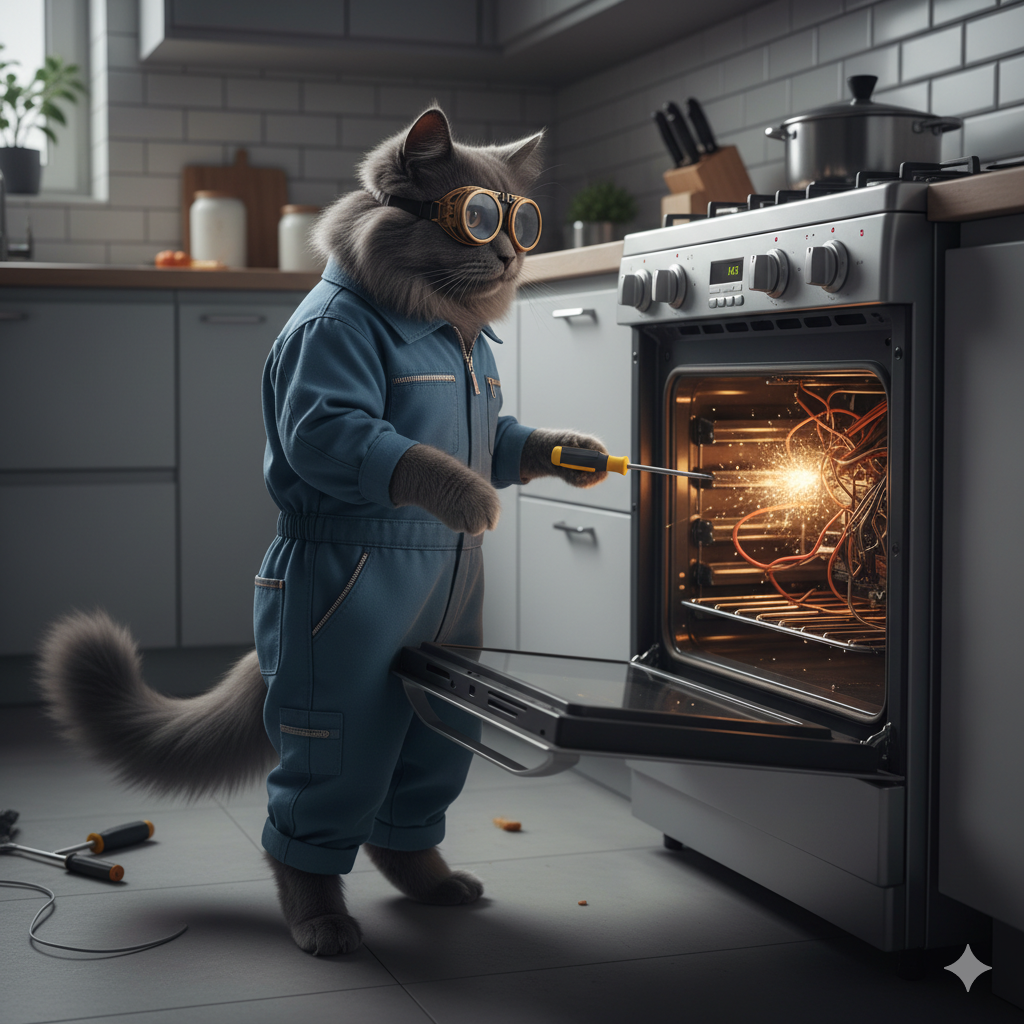
Electric oven Not Heating Properly: Faulty temperature sensor, miscalibrated thermostat, or damaged heating element
Oven Light is Out: Burned-out bulb or faulty light socket/switch.
Oven Door Won’t Shut Properly: Worn or broken door hinges or a damaged door seal
Gas Oven is Not Heating: Faulty igniter (most common) or a gas valve issue.
Gas Smell: Gas leak. Immediate Safety Step: Turn off the gas supply immediately. Do not use electrical switches (lights, fan, etc.). Open windows to ventilate and call the gas company or a professional technician immediately.
No power/won’t turn on: The microwave is completely unresponsive. Possible causes are a blown internal fuse, a defective door switch, or a power issue (like a tripped breaker or a bad outlet).
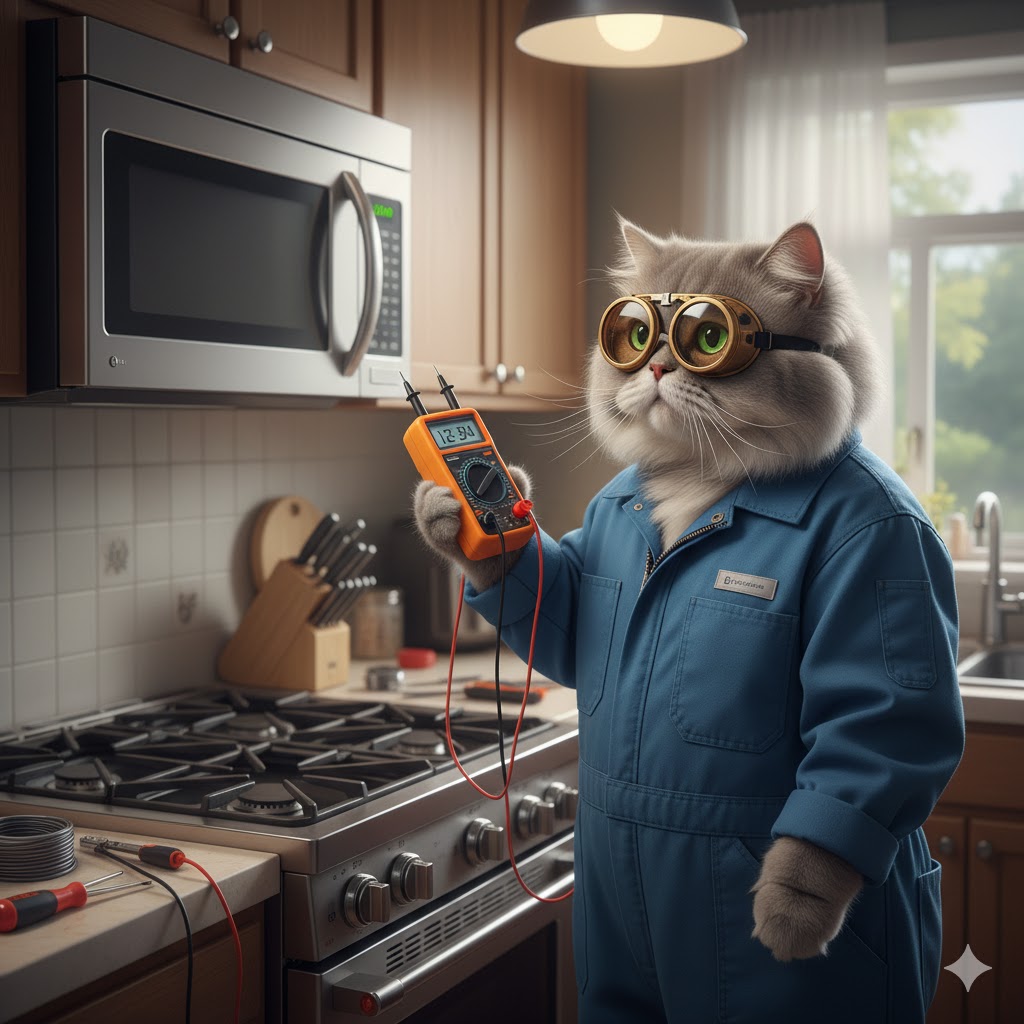
Microwave not heating food: The appliance runs, but the food remains cold or heats unevenly/slowly. This can be due to a faulty magnetron, diode, or capacitor.
Turntable plate does not spin: The plate doesn’t rotate, leading to uneven cooking. This is often caused by the plate being misaligned, food debris blocking the roller ring/coupler, or a broken turntable drive motor.
Microwave sparks or arcs: There’s flashing or crackling inside the microwave. This can be caused by metallic objects inside, food splatters, a damaged waveguide cover, or a faulty high-voltage diode.
Buttons/Touchpad not working: The control panel is unresponsive. This may be due to a faulty touchpad/control panel or a temporary glitch that can be fixed by unplugging and resetting the microwave.
Unusual or loud noises: The microwave makes humming, buzzing, scraping, or grinding sounds during operation. Sources can include a faulty drive motor, a defective magnetron, or a cooling fan motor problem.
Door won’t close properly: The door latch or hinges are misaligned or broken, preventing the microwave from operating due to its safety features.
Gas Dryer connecting
Connecting a gas dryer requires careful attention to both gas and venting. A secure, leak-free gas line connection is paramount for safety, and professional help is recommended. Proper venting, using rigid ductwork, expels moist air outdoors, preventing fire hazards and moisture buildup.
Appliance replacement
Appliances aren’t built to last forever. Eventually, wear and tear, coupled with technological advancements, necessitate replacement. Knowing when to make the switch can save you money and headaches.
Door switching
Changing a door’s swing is a practical home improvement task that can significantly enhance a room’s functionality. However, it requires a combination of careful planning, precise execution, and a good understanding of door hardware.
Appliance servicing
Regular home appliance servicing, especially cleaning dust and lint, is crucial for safety and efficiency. Lint buildup in dryers poses a fire hazard, while dust accumulation in refrigerators and air conditioners reduces performance and increases energy consumption. Routine cleaning prolongs appliance lifespan and ensures optimal functionality.
Light bulb replacing
Replacing appliance bulbs is often straightforward, but safety is key. Always disconnect power before changing bulbs, and consult your appliance’s manual for specific instructions. If you’re unsure or uncomfortable working with electrical components, it’s best to hire a qualified professional to avoid potential hazards or damage.
Emergency disconecting
In emergencies like floods or fires, quickly disconnect appliances to prevent electrical hazards. For electric appliances, unplug them or switch off the circuit breaker. For gas appliances, shut off the gas valve. Afterwards, always hire a qualified professional to inspect and restore connections, ensuring safety before resuming use.
Appliance technician, Local appliance repair, Appliance maintenance, microwave repair, oven repair, Dryer repair, Appliance setup, Appliance repair, affordable appliance repair, Same-day appliance repair, Freezer repair, Refrigerator not cooling, Dryer not heating, washing machine repair, Dishwasher leaking, Broken appliance, appliance repair in Sayreville, Appliance parts, Reliable appliance repair, washing machine repair near me, refrigerator repair, Dishwasher repair, Appliance troubleshooting, Home appliance repair, dryer repair near me, Appliance installation, washer repair, Appliance service, emergency appliance repair, Garbage disposal replace, appliance repair near me, Electric appliance repair, fridge repair near me, range repair, stove repair, Appliance tune-up, Gas appliance repair, Appliance repair, Appliance diagnostics, Oven not working, Washer not spinning